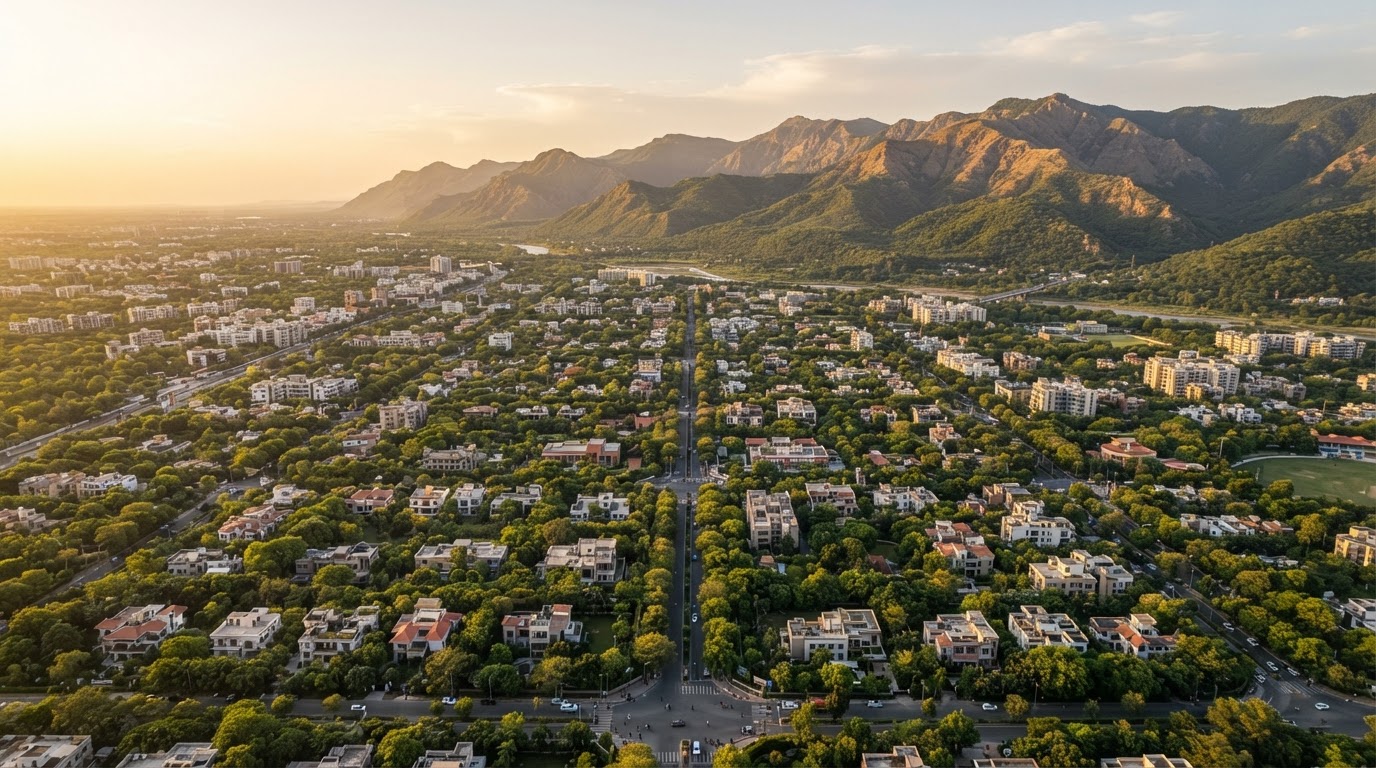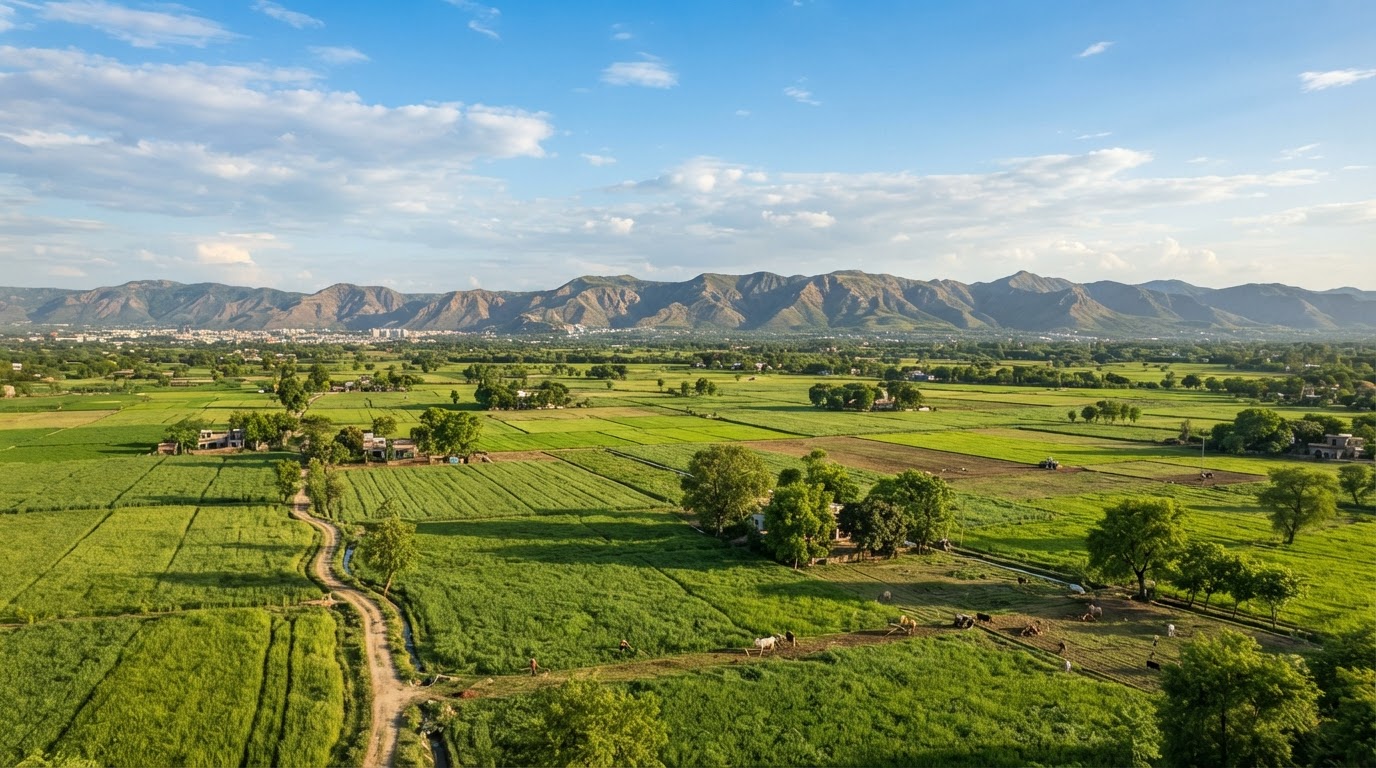
Agricultural land near Panchkula has drawn growing interest from long-horizon investors, and after watching these corridors for three decades, I can tell you the opportunity is real — but it is built for patient capital and requires careful verification. This guide offers a grounded look at the opportunities, the risks and what to verify before investing in agricultural land near Panchkula. It is general information, not legal advice; every transaction should be reviewed by a qualified professional.
The opportunity is appreciation through outward growth. As a planned city with well-established sectors, Panchkula's natural direction of expansion is along its approach corridors — towards Pinjore, Morni and the surrounding belt. Agricultural land in the path of this growth can appreciate meaningfully over years as connectivity and demand arrive. The return is entirely in appreciation; agricultural land produces no rental income, so the investor must be comfortable with a non-income asset.
The horizon is the first thing to be honest about. Infrastructure-led growth — roads, water, civic works — arrives on its own schedule, not the investor's. Land that will appreciate when a road is completed can sit for years before that road arrives. Investors who need income or sooner liquidity should look elsewhere; agricultural land rewards investors who can wait years for the fundamentals to arrive.
Permissible use is the factor that decides the value ceiling. Agricultural land that can be legally converted for residential, commercial or farmhouse use is worth far more than land that cannot. Change-of-land-use permissions are a formal process, and land without a clear path to conversion may remain locked in agricultural use, limiting both its development and its resale value. Confirm the land-use status and the realistic prospects for conversion before you invest.
Water access is the practical factor that determines whether the land can be used or developed. Agricultural land without reliable water access is far harder to cultivate, develop or enjoy, which limits both its use and its resale. Verify water availability — borewell, canal, groundwater status — as part of due diligence. In some belts, water is the single factor that separates usable land from land that sits idle.
Title and boundaries deserve particular attention on agricultural land. Ownership histories can be complex, land may be jointly held or subject to family partition, and boundary disputes are not uncommon. A thorough title verification, clear boundary demarcation and confirmation of ownership are non-negotiable. Engaging a qualified legal professional is essential — more than in almost any other property transaction.
The risk of speculation is the cautionary note. Agricultural land can attract narrative-driven buying, where a corridor becomes fashionable and prices rise on expectation rather than delivered infrastructure. Investors who buy at the peak of a narrative can wait years for the fundamentals to catch up to the price they paid. Grounded, current, local advice is what separates a sound land investment from a speculative one.
Conversion and regularisation costs should be part of the investment math. Moving agricultural land to a usable, developable status can involve fees, applications and time, and in some cases ongoing compliance. These costs and timelines should be understood before purchase, not discovered after. A plot that looks cheap can become expensive once the full path to usable status is accounted for.
Diversification within land is wise for investors with larger allocations. Rather than placing all capital in a single plot, spreading across corridors or across land types reduces the risk that a single road delay, a single boundary issue or a single conversion setback dominates the outcome. As with any asset, concentration increases risk, and land is no exception.
The takeaway is that agricultural land near Panchkula can reward patient investors — provided the land has clear title, verified boundaries, reliable water and a realistic path to permissible use, in a corridor whose trajectory is genuinely progressing. Avoid narrative-driven speculation, account for conversion costs, and let local, current advice guide you. That is the disciplined approach that has helped patient investors grow value in this market for thirty years.