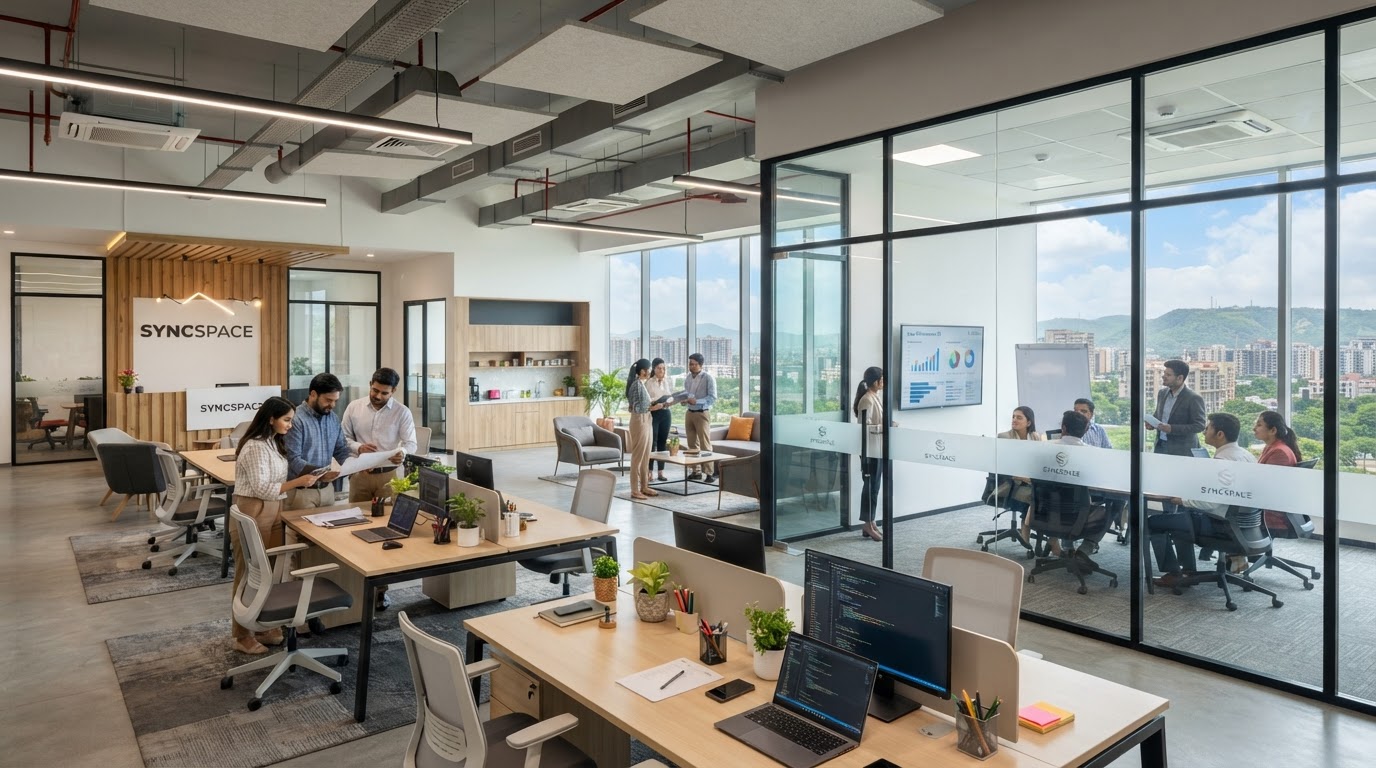
The MDC — Modern Housing Complex — belt in Panchkula has developed a distinct commercial identity as an office-space pocket, and after working this market for three decades, I have come to see it as one of the steadier commercial investment options in the city. It does not offer the highest headline yield, but it offers something many commercial investors value more: longer tenancies and lower turnover risk. Understanding why it works is the key to deciding whether it fits your strategy.
What defines the MDC belt commercially is its character. Unlike the busy main-road commercial stretches, the MDC area is quieter, more planned, and oriented towards professional practices, clinics and service businesses that prefer a calmer setting. That character shapes the tenant profile — and the tenant profile is what drives the steadiness that makes this pocket attractive to income-focused investors.
The tenant base is the core of the appeal. Professional practices — doctors, lawyers, architects, consultants — and service businesses tend to stay longer than high-street retail tenants, because their clients come by appointment and their location is part of their brand stability. Longer tenancies mean lower turnover cost, fewer void periods and more predictable income. For investors who want dependable cash flow, this stickiness is the feature, not a limitation.
Parking and accessibility are the operational factors that sustain MDC's tenant demand. Professional practices and clinics need parking for clients and staff, and the MDC belt's planned layout generally provides this better than denser commercial stretches. A commercial space that clients can reach and park at easily sustains stronger, longer tenancies than one where access is a daily friction. This is the quiet infrastructure that underpins the belt's commercial value.
For business owners, the MDC belt suits a specific kind of operation. If your business depends on walk-in retail footfall, a main-road SCO is usually the better fit. If your business runs on appointments, referrals and a professional environment — a clinic, a practice, a service office — the MDC belt's calmer setting can support your brand and your clients' experience better than a busy commercial road. Match the location to the business model, not to a generic preference.
For investors, the yield-versus-stability trade-off is the decision to weigh. MDC office space typically rents at a steadier but lower rate than high-street retail, with lower vacancy risk. The investors who do well here are the ones who value predictable income and lower turnover cost over the highest headline yield. If your priority is dependable cash flow with less management intensity, the MDC belt is often the better commercial choice.
Lease terms matter as much as in any commercial letting, and the longer-tenancy character of the MDC belt makes them especially important. Rent, escalation, lock-in, maintenance responsibilities and renewal terms should all be clearly written. Because tenants tend to stay longer, the escalation clause compounds over more years — so a modest, predictable escalation is generally better for both sides than a steep one that pushes rent above market over time.
Documentation and approvals deserve the same scrutiny as any commercial property. Title verification, approved building plans, occupancy certificates, permissible use and clear tax records should all be in order. For office space specifically, confirm that the property is approved for the intended commercial use and that any modifications the tenant may need — signage, partitioning, utilities — are permissible. Clean documentation protects both the income and the resale.
Future development in and around the belt is worth watching. The MDC area's character has evolved over years, and further civic or commercial development nearby can affect demand — positively or negatively. A local advisor can give you a current read on planned works, new supply and demand trends in the belt, which is worth more than any static assumption. Commercial markets shift, and current local knowledge is the investor's edge.
The takeaway is that the MDC office belt offers a steadier commercial investment for investors who value predictable income and lower turnover over the highest yield. Its calmer, planned character attracts stickier professional and service tenants, and parking and accessibility sustain that demand. Verify the documentation, weigh the lease terms, and match the investment to an income-focused strategy. Do that, and the MDC belt can be a dependable part of a commercial portfolio — and that is the grounded view I have given Panchkula investors for thirty years.