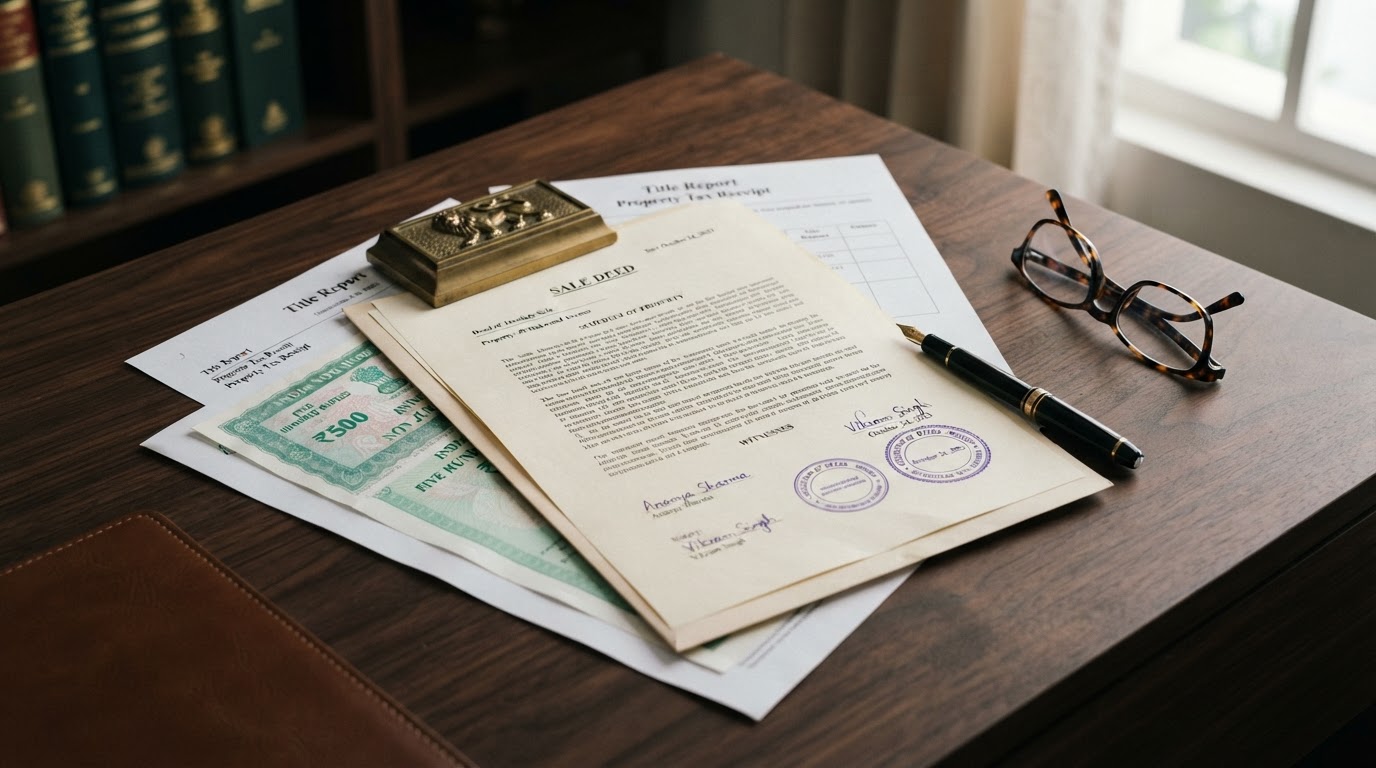
If there is one area where property buyers lose money, it is not in price — it is in documentation. A property can look perfect and still be a poor purchase if the title is unclear, the boundaries are wrong, or the approvals are missing. This guide is a practical overview of what to check when buying property in Panchkula; it is general information, not legal advice, and every transaction should be reviewed by a qualified legal professional. Treat it as the starting map, not the destination.
Title verification is the foundation, and it exists for a simple reason: to confirm that the person selling the property genuinely owns it and has the right to transfer it. Verification typically involves tracing the chain of ownership, checking for encumbrances or charges against the property, and confirming there are no pending disputes. Skipping this step is the single most common cause of costly property disputes — and the most avoidable.
The sale deed is the primary document that records and transfers ownership, and an agreement to sell usually precedes it, setting out the terms. Both must be drafted carefully and, where required, registered. A poorly drafted or unregistered document can undermine an otherwise sound transaction, so professional legal review of these documents protects your interest at the moment it matters most.
Mutation is the step many buyers forget — and regret. Mutation updates the government records to reflect the new owner's name after a sale, and it is essential for future resale, financing and clean tax records. It should be completed promptly after registration, because delays can complicate later transactions and surface as problems years down the line when you least expect them.
An encumbrance certificate tells you whether the property carries any registered charges or liabilities — effectively, whether it is financially clean. A clear certificate reassures you, and any future buyer or lender, that the property is free of registered debts. It is commonly required for loans and resale, so obtaining it as part of due diligence is not optional but standard practice.
Stamp duty and registration charges are payable to legally record the sale, and they add a meaningful percentage to your total cost. Rates vary and should be confirmed against current Haryana rules before you transact — the figures you budgeted at the start of a search may not match the rates that apply at closing. Budget for these charges upfront so they never become a cash-flow surprise at the finish line.
For built property, approved building plans and an occupancy or completion certificate matter. Approved plans confirm that construction complied with local rules; the occupancy certificate confirms the building is fit for use. Missing approvals can complicate financing and resale, and in some cases expose a buyer to regularisation costs later. Always check these documents before buying any built property, however good the finishes look.
Property tax records should be current. Unpaid property tax can become a lien on the property, and buyers inheriting arrears inherit the liability too. Ask for recent tax receipts and confirm the assessment is up to date. Keeping tax records clean also matters for your own future resale, because the next buyer will ask you the same questions you are asking now.
Where RERA applies to a project, check the registration status. RERA is a regulatory framework designed to protect buyers and improve transparency in project delivery, and checking registration where it applies gives you a layer of assurance about the project's commitments. This overview is general; whether RERA applies to a specific transaction, and what it means for you, is a question for a professional familiar with your case.
The pattern across all of this is that documentation, done early and done properly, prevents problems that are expensive to fix later. A due diligence checklist — title, encumbrances, boundaries, approvals, tax receipts, mutation — is not bureaucracy; it is the protection that turns a hopeful purchase into a safe one. Engage a qualified legal professional, keep your records organised, and never let excitement about a property rush you past the paperwork. The buyers who sleep well are the ones whose documents are in order.