The renting-versus-buying question is one of the most personal decisions in property, and after thirty years of guiding families through it, I can say with confidence that there is no universally right answer. There is only the answer that fits your finances, your stability and your horizon. The goal of this guide is to give you a practical framework for making that decision in Panchkula in 2026 — not to push you toward either side.
Buying makes the most sense when you have stability and a long horizon. If you plan to live in Panchkula for the foreseeable future, have a stable income, and can manage the down payment plus registration, taxes and maintenance, ownership builds equity and gives you control over your home. Over a long enough period, the land-backed value of a Panchkula property tends to work in your favour — particularly for independent houses and well-located plots.
Renting makes sense when flexibility matters more than equity. If your work may move you, if you are still exploring which sector suits you, or if your finances are not yet ready for the full cost of ownership, renting keeps your options open and your capital free. Renting is not wasted money — it buys flexibility and time, which are genuinely valuable when your circumstances may change. Many of my clients rent first, then buy once they know the city well.
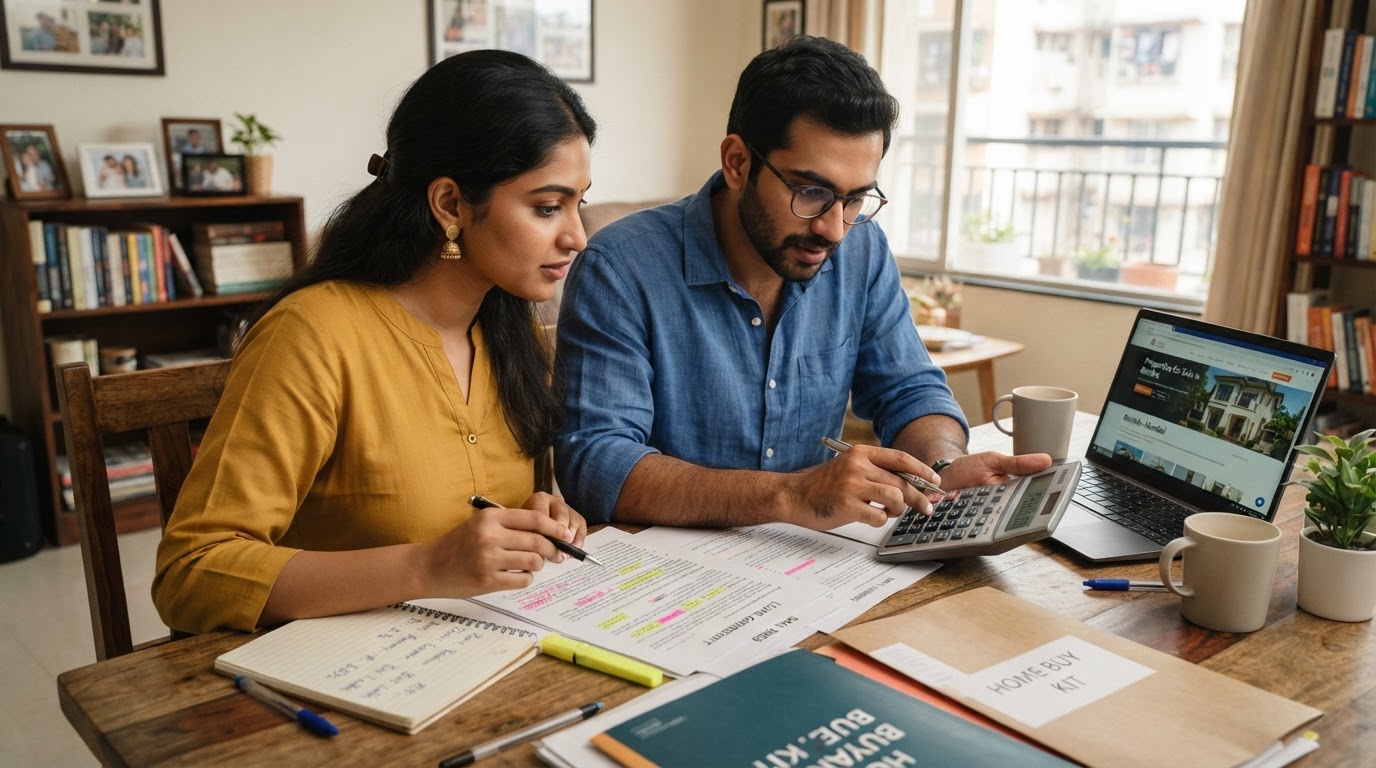
The full cost of ownership is the figure most buyers underestimate. Beyond the purchase price, ownership carries registration and stamp duty, property tax, maintenance, repairs and the opportunity cost of the capital tied up in the property. A fair comparison with renting must include all of these, not just the monthly EMI versus the monthly rent. When you add the full picture, the gap between renting and buying is often narrower than it first appears.
Your horizon is the single most important variable. Over a short horizon — say, two to three years — transaction costs (registration on the way in, brokerage and taxes on the way out) can eat much of the appreciation, making renting the better financial choice. Over a long horizon — seven to ten years or more — ownership tends to pull ahead, because transaction costs are amortised over more years and land-backed value compounds. Match the decision to how long you realistically expect to stay.
Stability of income and location should be honest inputs, not hopeful ones. Ownership commits you to a fixed cost for years; if your income or location is uncertain, that commitment can become a strain. Renting absorbs uncertainty more gracefully. Buyers who stretch into ownership on optimistic assumptions about future income are the ones who end up stressed; buyers who wait until their foundation is solid tend to buy once and buy well.
The Panchkula-specific factor is the quality of the rental market. Panchkula's planned sectors sustain a steady rental supply, which means renters can usually find good homes in strong sectors without compromising much. That makes renting a genuinely viable medium-term option here — you are not forced to buy to access good neighbourhoods. This is a real advantage of this market compared to cities where good rental stock is scarce.
For buyers who decide to buy, the practical advice is unchanged: set a realistic budget including all costs, shortlist two or three sectors, compare like-for-like properties, and verify documentation thoroughly. For renters, the advice is to choose a sector and a property that fits your daily life, read the lease carefully, and use the renting period to learn the city before you commit to ownership.
A common mistake is to treat the decision as permanent. It is not. Many people rent first and buy later; some buy, then rent elsewhere for work. The right choice today may differ from the right choice in five years. The framework — horizon, finances, stability, full cost — is what stays constant. Revisit it whenever your circumstances change.
The takeaway is to decide deliberately, not by default. Weigh the full cost of ownership against the flexibility of renting, be honest about your horizon and income stability, and use Panchkula's strong rental market to your advantage if you need time. The buyers and renters who end up happiest are the ones who matched the choice to their life — and that is the same grounded advice I have given for three decades.