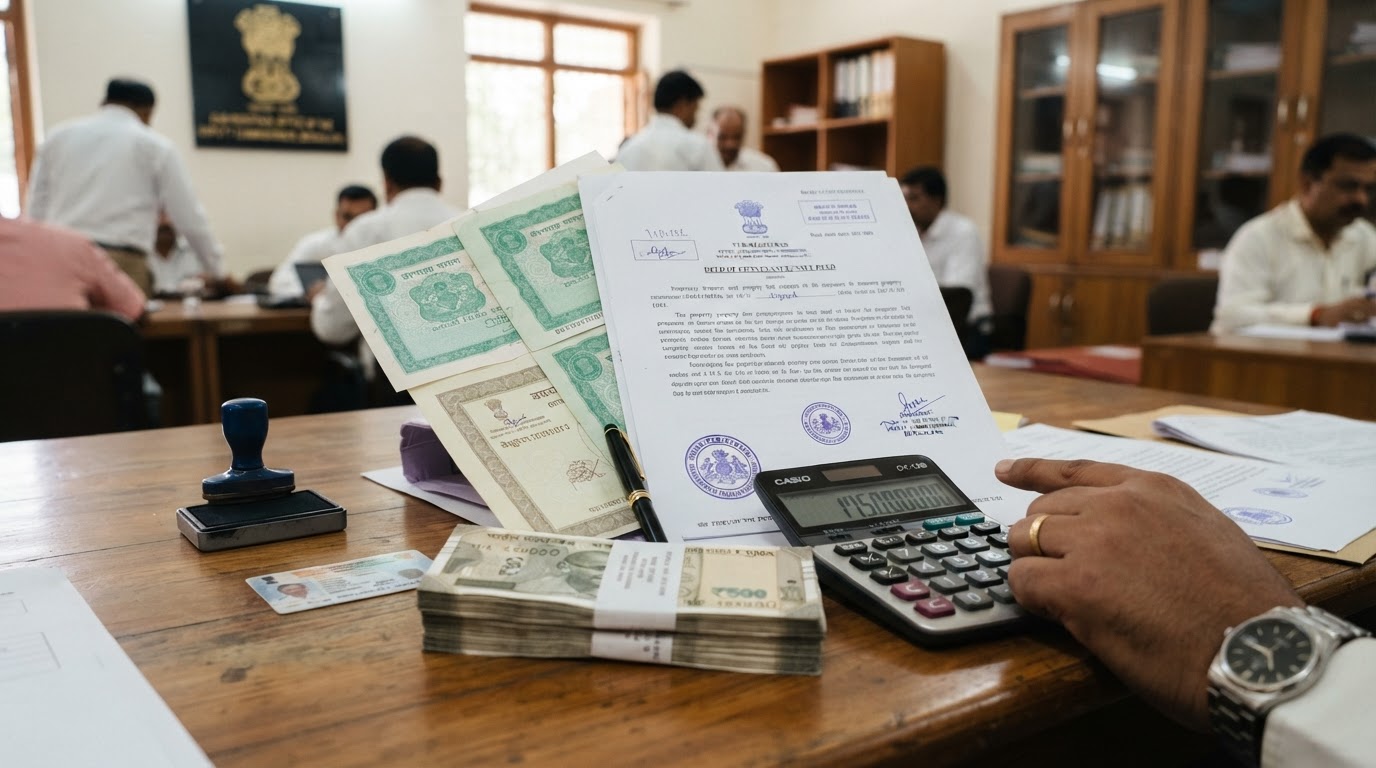
Stamp duty and registration charges are among the most overlooked costs in buying property, yet they add a meaningful percentage to the total purchase price. After guiding buyers in Panchkula for three decades, I have seen how often these costs surprise people at the finish line. This guide is a practical overview of what these charges are and how to budget for them; it is general information, not legal advice, and current rates should be confirmed against Haryana rules at the time of transaction.
Stamp duty is a tax payable on the legal document that records the transfer of property — typically the sale deed. It is what gives the document legal validity and makes the transfer enforceable. Without proper stamp duty, a sale deed may not be admissible as evidence in court, which undermines the very ownership it is meant to record. Paying the correct stamp duty is not optional; it is what makes the purchase legally sound.
Registration is the process of recording the sale deed with the relevant authority, which makes the transfer a matter of public record. Registration protects the buyer's ownership against later claims, because the transaction is officially documented and discoverable. A property that is not properly registered can be difficult to finance, resell or defend in a dispute. Registration and stamp duty together are what move a property from agreement to ownership in the eyes of the law.
The rates matter because they are a percentage of the property value, not a fixed fee. Stamp duty in Haryana is set as a percentage of the transaction value or the circle rate, whichever is higher, and the applicable rate can vary with factors such as the buyer's gender and the property type. Registration charges are a separate, smaller percentage. Together, they can add a significant sum to the total cost — often more than buyers expect.
Circle rates deserve understanding. The circle rate is the government's minimum assessed value for a property in a given area, used to calculate stamp duty. If the agreed sale price is below the circle rate, stamp duty is calculated on the circle rate — which means a buyer cannot reduce stamp duty by simply agreeing a lower price. Knowing the circle rate in your sector helps you anticipate the real stamp duty cost before you commit.
Budgeting for these costs upfront prevents cash-flow surprises at closing. A buyer who budgets only the purchase price and the loan can find themselves short at the moment of registration, which can delay the very transfer they have worked toward. Build stamp duty, registration and related charges into your total budget from the start, so the finish line is a formality, not a scramble.
Timing matters. Stamp duty must be paid before or at the time of registration, and registration should follow the execution of the sale deed within the prescribed period. Delays can attract penalties and complicate the transfer. A clear timeline, agreed with your advisor and the seller, ensures the documents and the payments come together cleanly at the right moment.
For financed purchases, the lender's requirements interact with stamp duty and registration. Banks typically require the sale deed to be properly stamped and registered before disbursing the full loan amount, and they may hold the original documents as security. Understanding the lender's process and timing helps coordinate the registration, the loan disbursement and the possession handover into a smooth sequence rather than a series of bottlenecks.
Related charges should be anticipated alongside stamp duty and registration. These can include mutation fees to update government records in the new owner's name, charges for obtaining an encumbrance certificate, and any charges for document drafting or legal review. None of these is large individually, but together they form part of the true cost of acquisition and should be part of a complete budget.
The takeaway is to treat stamp duty and registration as a core part of the purchase cost, not an afterthought. Understand that they are a percentage of the value or circle rate, confirm the current Haryana rates before you transact, know the circle rate in your sector, and budget for them from the start. The buyers who close smoothly are the ones who planned for these costs — and that is the practical advice I have given Panchkula buyers for thirty years.