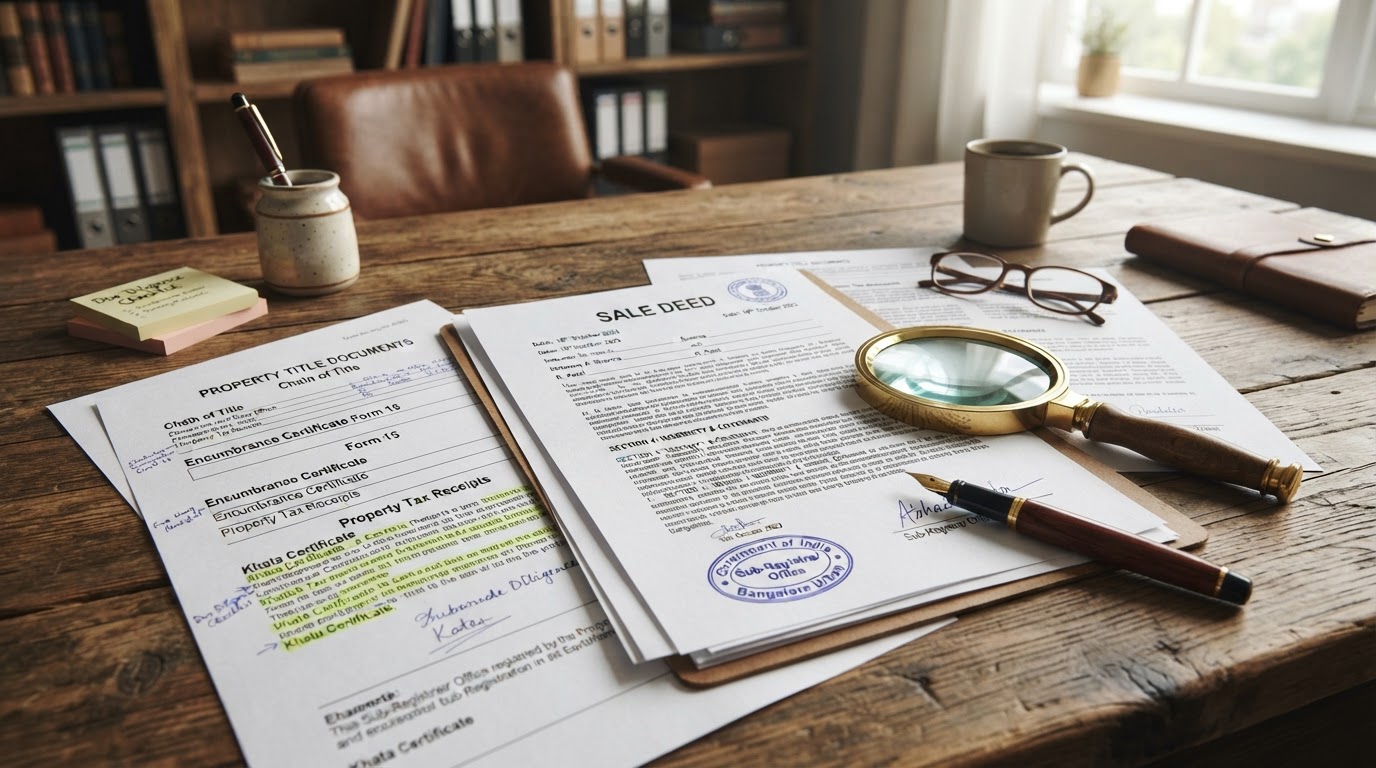
If there is one step in buying property that I have urged every client to take seriously over thirty years, it is title verification. A property can look perfect and still be a poor purchase if the title is unclear. Title is the foundation of ownership — the confirmation that the person selling the property genuinely owns it and has the right to transfer it. This guide is a practical overview, not legal advice; every transaction should be reviewed by a qualified legal professional.
Title verification exists for a simple reason: to protect the buyer. When you buy a property, you are buying the legal right to own and use it. If that right is unclear — because the chain of ownership has a gap, because there is a dispute, or because the seller does not actually have full rights — your purchase can be challenged, and your investment put at risk. Title verification is the step that confirms the foundation is solid before you build on it.
The process typically involves tracing the chain of ownership back over a meaningful period, to confirm that each transfer was legitimate and that no links are missing. For older properties, this chain can be long; for newer ones, shorter. The goal is the same: to establish that the seller's claim is complete and unbroken. A gap or an unexplained transfer in the chain is a red flag that must be resolved before any payment.
Encumbrances are the next layer. An encumbrance is any registered charge or liability against the property — a mortgage, a lien, a court attachment — that affects the owner's ability to transfer it freely. An encumbrance certificate tells you whether the property carries such charges. A clear certificate reassures you, and any future buyer or lender, that the property is financially clean. Buying a property with undisclosed encumbrances can mean inheriting someone else's liability.
Disputes and litigation are the risks title verification is designed to surface. A property involved in an ongoing court case, a family partition dispute or a boundary conflict can be nearly impossible to sell or finance until the dispute resolves. Public records and, where relevant, court records should be checked to confirm the property is not entangled in litigation that would undermine your ownership.
For land and plots, boundaries and land-use status are part of the title picture. Clear boundary demarcation confirms what you are actually buying, and approved land use confirms what you can legally do with it. Agricultural land that has been converted for residential or commercial use must carry the proper change-of-land-use documentation. A plot with unclear boundaries or unapproved use can be worth far less than its location suggests — and can be hard to sell at all.
For built property, approved building plans and an occupancy or completion certificate connect the title to the structure. Approved plans confirm that construction complied with local rules; the occupancy certificate confirms the building is fit for use. Missing approvals can complicate financing and resale, and in some cases expose a buyer to regularisation costs later. These documents are part of the title story for any built property.
The role of a qualified legal professional is not a formality — it is the protection that makes verification meaningful. A lawyer experienced in property transactions can read the documents, spot the issues a buyer would miss, and advise on whether the title is clean or whether risks need to be resolved before purchase. The cost of legal review is a fraction of the cost of a title dispute, and it is the single best investment a buyer can make.
A common mistake is to treat title verification as a step to rush once a property has been chosen. The right sequence is the opposite: verify the title before you commit, not after. Once a buyer has paid a token or signed an agreement to sell, leverage shifts, and resolving a title issue becomes far harder. Verification first, commitment second — that order protects you at the moment it matters most.
The takeaway is that title verification is not bureaucracy; it is the protection that turns a hopeful purchase into a safe one. Trace the ownership chain, check for encumbrances and disputes, confirm boundaries and land use, verify building approvals, and engage a qualified legal professional to review it all. The buyers who sleep well are the ones whose titles are clean — and that is the lesson thirty years of this market has made unmistakable.